
RF defrosting for meat & poultry processing: yield, speed & quality
Frozen meat and poultry have to be brought back to a workable temperature before they can be sliced, diced, minced, formed or cooked. How you do that has a direct effect on yield, hygiene, throughput and product quality. This guide explains why radio-frequency (RF) defrosting has become the method of choice for processors who care about all four.
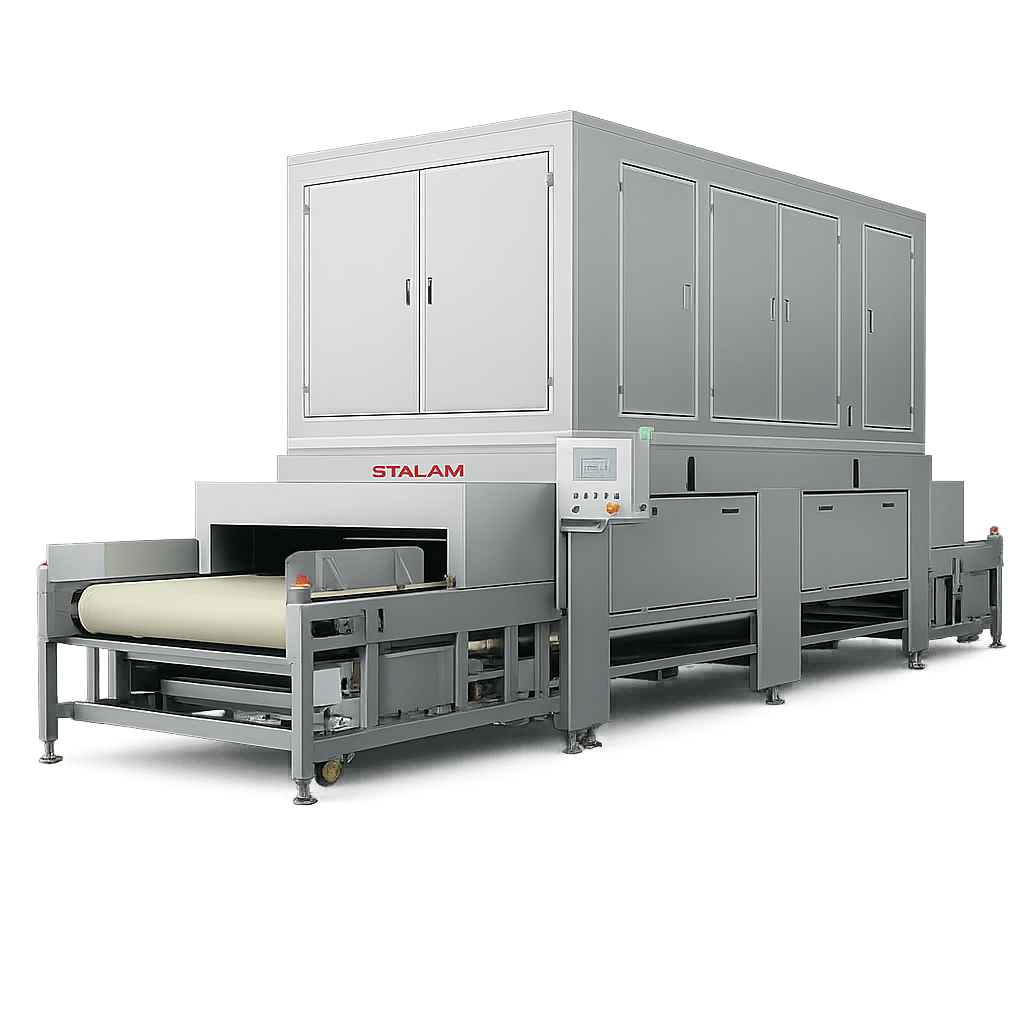
The problem with conventional thawing
Most processors still thaw frozen blocks in a chill room over one to three days. It is simple, but it carries real costs. Heat transfers slowly from the surface inwards, so the outside of the block warms up long before the core, giving an uneven result. During that time the warm, moist surface is an ideal environment for bacterial growth, and the slow process produces significant drip loss — purge that takes weight, protein and value out of your product before it ever reaches the line.
It also ties up a lot of refrigerated space and makes production planning difficult. If demand changes, you cannot simply thaw faster; you are locked into the schedule the room dictates.
How radio-frequency defrosting works
Radio-frequency defrosting takes a completely different approach. Instead of applying heat to the outside, it generates heat inside the product. The block passes between two electrodes carrying a high-frequency alternating field, which makes the water molecules within the meat vibrate. That molecular movement produces gentle, even warming throughout the whole block at once.
Because the energy works volumetrically rather than transferring slowly from the surface, a block that once took days reaches its target tempering temperature in minutes — typically to around −3°C to −1°C, ideal for onward processing, without any surface cooking.
Why processors switch to RF
- Speed: minutes instead of one to three days
- Yield: markedly lower drip loss, so weight and protein stay in the product
- Uniformity: even temperature from core to surface, no hot edges or frozen centres
- Hygiene: no prolonged warm, moist window for bacteria to multiply
- Space: a compact in-line unit replaces a large thawing room
- Control: continuous, predictable throughput that fits modern production planning
Yield: the number that pays for the machine
For most meat and poultry processors, yield is where RF justifies itself. Conventional thawing can lose several percent of product weight as drip. Because RF is fast and even, it keeps the temperature gap between surface and core small, which dramatically reduces that purge. On high volumes of beef trim, poultry or pork, recovering even a few percent of weight represents a substantial, recurring saving that quickly outweighs the cost of the equipment.
Applications across meat & poultry
RF tempering suits a wide range of products and formats:
- Beef, pork and lamb blocks — tempered for slicing, dicing, mincing and forming with minimal drip loss.
- Poultry — rapid, uniform tempering of blocks and cartons ahead of portioning and further processing.
- Beef trim for grinding — consistent temperature for reliable grinding, blending and portion control.
- Formed and comminuted products — even tempering for consistent downstream production.
The same principle applies to fish, seafood, fruit and ready meals, which is why RF is used right across the food industry — but for meat and poultry specifically, the combination of yield protection and throughput is compelling.
RF vs the alternatives
RF is not the only option, and an honest supplier will tell you where each method fits. Water thawing is gentle and works well for fish and thinner formats. Controlled-air tempering rooms suit some operations. Microwave heats quickly but unevenly, with hot spots and edge cooking on thick product. For solid meat and poultry blocks where yield, uniformity and throughput matter most, RF is usually the strongest choice — but the right answer depends on your product, and that is exactly the conversation worth having before you invest.
Choosing a supplier, not just a machine
Global Food Technology is the UK and Ireland supplier of Stalam industrial radio-frequency thawing and tempering equipment — the world leader in RF for food. Because we are a specialist food processing equipment supplier rather than a single-machine manufacturer, we can also supply water thawing and controlled-air tempering where those suit your product better, and advise you honestly on which route to take.
We support processors across the UK and Ireland with sales, application advice, installation, commissioning and ongoing service, and we can arrange product trials so you can see the results on your own product before committing.
Talk to us about RF defrosting for your line
Tell us your product, block size, throughput and target temperature, and we will recommend the right system and help arrange a trial.