
Thawing fish & seafood without losing quality
Fish and seafood are delicate, high-value products, and the way they are thawed has an outsized effect on texture, appearance, drip loss and shelf life. This guide compares the main thawing methods and explains how to protect quality while keeping throughput high.
Why thawing matters more for seafood
Fish flesh is softer and more temperature-sensitive than red meat. Thaw it too slowly and you get drip loss, dull colour and a soft, degraded texture; thaw it unevenly and parts begin to cook or spoil while the core is still frozen. For processors selling on appearance and freshness, poor thawing quietly erodes both yield and grade.
The goal is a controlled, uniform, gentle rise to a workable temperature, fast enough to protect quality and hygiene but without shocking the product.
What good seafood thawing protects
- Texture — no softening or degradation
- Yield — minimal drip loss and retained weight
- Appearance — colour and surface quality preserved
- Hygiene — no prolonged warm, moist window
- Throughput — continuous, predictable processing
Radio-frequency thawing for fish
Radio-frequency (RF) thawing generates heat inside the product using a high-frequency field, warming the whole block evenly in minutes rather than hours or days. For blocks and cartons of fish, that means minimal drip loss, preserved texture and a consistent temperature ready for filleting, portioning or further processing.
Because it is fast and contact-free, RF also avoids the prolonged warm, moist conditions that encourage bacterial growth — an important consideration for seafood safety.
Water thawing lines
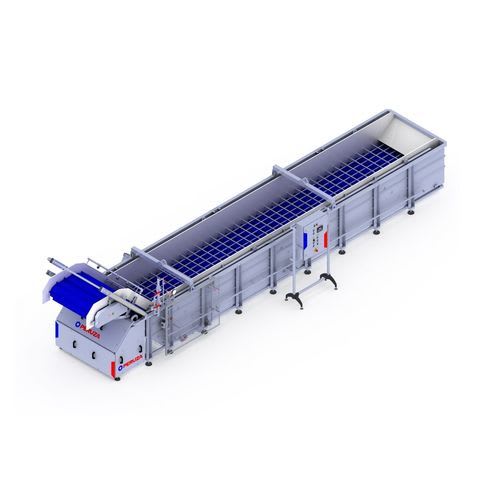
For many fish applications, particularly thinner formats and continuous high volumes, water thawing is an excellent fit. Peruza water thawing lines move product gently through temperature-controlled water, giving even, controlled thawing that protects delicate texture and appearance while handling serious throughput.
Water thawing is gentle and proven; the trade-offs are water use and drainage, and it suits some formats better than solid blocks.
Choosing the right method
The honest answer is that it depends on your product and format. RF excels on blocks and cartons where yield and speed matter; water thawing suits fish and thinner formats; controlled-air rooms suit some operations. Because Global Food Technology supplies all three — Stalam RF, Peruza water lines and Kometos thawing rooms — we can recommend whichever genuinely fits, rather than selling you a single machine.
We support fish and seafood processors across the UK and Ireland with advice, installation and trials so you can see the results on your own product.
Thawing fish or seafood? Let's find the right method
Tell us your product, format and throughput and we'll recommend RF, water or controlled-air thawing — and arrange a trial.